On November 12, 2026, the Pittsburgh Zoning Board of Adjustment heard seven cases and issued no decisions from the bench. Most of the day went to the proposed year-round overnight shelter at 3567 Bigelow Boulevard in Polish Hill, back after an October 1 continuance. The hearing ran nearly four hours, with Allegheny County Department of Human Services witnesses, cross-examination by an attorney for neighboring owners, Councilmember Deb Gross, and more than 50 residents for and against. The Board asked the lawyers for proposed findings within six weeks, so a decision likely won't come until 2027. Earlier in the morning the Board heard a Manchester builder asking to keep two nearly finished houses that were built too close to the street, plus a wheelchair-access parking pad in Overbrook, Pittsburgh Water surge tanks on both sides of the Allegheny, and a Brighton Heights duplex. A Highland Park addition and Trek Development's 43-unit building on McPherson Boulevard were continued. Here's what happened, by case.
Recording: https://www.youtube.com/watch?v=Z00tAGCLFSY
Hearing and Action
Zoning Case 144 of 2026 — 2201 Groveland Street (Overbrook)
City materials: Case packet · Meeting agenda
Summary of Case
Variance from Section 912.04.L, which prohibits front-yard parking, for a 20-by-34-foot parking pad at the front lot line in an R1D-M district (BDA-2026-08082). The owners testified themselves because their architect didn't join the call. They said they want to widen the existing 12-foot driveway by a few feet and pave the gravel apron so a wheelchair can get in and out of the car. Both owners have accessible parking placards, one has a replaced hip and a fused ankle, an elderly aunt uses a wheelchair, and the house already has a stair lift. They said the small garage can't fit today's vehicles and there's no room to unload a wheelchair inside it.
Discussion
Chair Alice Mitinger walked through the drawing to confirm only a small strip of green space in front of the stairs would be paved. Looking at the aerial, she noted the house across the street has a similar widened gravel pad with two cars, and the owners said they'd talked with their neighbors. LaShawn Burton-Faulk and John Richardson had no questions. No one commented in the room or online.
Decision
Hearing closed; decision pending. The Board accepted the exhibits and will issue a written decision within the 45 days the Code allows.
Zoning Case 147 of 2026 — 6031 Bunkerhill Street (Highland Park)
City materials: Case packet · Meeting agenda
Summary of Case
Variance from Section 903.03.C for a house addition in an R1D-M district: a 30-foot front setback is required and 20 feet is requested (BDA-2026-08471). The packet lists DG Builders LLC as owner.
Discussion
Before testimony, Mitinger asked the lawyers for the applicant and for neighbors whether they'd discussed a continuance, and they agreed to sit down first. Because the next-door neighbor had come in person, the Board let her make a short statement. Dr. Ann Massey said she has lived next door for 46 years and asked the Board to hold the 30-foot setback. She presented a petition she said was signed by everyone on the street and raised lost sunlight to her garden, her view down the street, safety backing out of her driveway on a narrow street, and an addition out of scale with the other houses. Mitinger said her statement and photos would go into the record but that things could change if the parties resolve their concerns. She also asked that any challenge to administrator exceptions on the project be filed so everything can be heard together.
Decision
Continued. The Board granted the continuance. The property will be reposted and neighbors notified when a new date is set, roughly 30 days out.
Zoning Case 148 of 2026 — 900 Freeport Road and 7881 Lock Way (Lincoln-Lemington-Belmar)
City materials: Case packets: 900 Freeport Road · 7881 Lock Way · Meeting agenda
Summary of Case
Variances from Section 912.04.E for Pittsburgh Water surge tanks in the RIV-IMU district: 20 feet is the maximum height for an accessory structure and 30 feet is requested (BDA-2026-02349 and BDA-2026-02351). The two parcels sit across the Allegheny River from each other, at Pittsburgh Water's Aspinwall and Bruecken pump stations. Heather Dotson presented for Pittsburgh Water. She said new, higher-service pumps need a roughly 20,000-gallon surge tank at each site to protect the rising mains. Each tank would be about 12 feet in diameter and a little over 31 feet tall, with a footprint of about 224 square feet. The team said tight sites, truck access, and buried and overhead utilities mean the tanks have to be tall and set tight against the existing buildings rather than shorter and wider. The Aspinwall pump station itself is about 70 feet tall.
Discussion
Mitinger asked whether anything would soften how the tanks look from the river. The team said they'd be coated to match the buildings and other structures on site, not left as bare steel, but renderings with colors aren't done yet. No one commented in the room or online.
Decision
Hearing closed; decision pending. The Board will issue a written decision within the time the Code allows.
Zoning Case 150 of 2026 — 1216 and 1220 Rush Street (Manchester)
City materials: Case packet · Meeting agenda
Summary of Case
Variance from Section 903.03.E for two attached single-unit houses in an R1A-VH district: a 5-foot front setback is required and 2 feet is requested (BDA-2024-02988 and BDA-2024-03146). Architect Kento Omori of Fukui Architects said the houses were permitted as of right, but the original contractor laid them out with a tape measure from the curb instead of the surveyed property line. The error came out at one of the last inspections, after the houses were basically finished, so the owner is "asking for forgiveness instead of permission." The front stoops will reach the property line and need an encroachment permit. Omori said Rush Street is one block long, about 25 feet wide and two-way, and faces mostly side and back yards of homes on North Franklin and Juniata streets. Owner Matt Renzi said the first contractor was fired and is being sued, and that the error wasn't intentional.
Discussion
One Board member recused. Mitinger said the Board doesn't like after-the-fact requests and asked whether anything could reduce the encroachment, such as redesigning the entries to avoid stoops. Omori said the Historic Review Commission approval called for stoops in the Manchester Historic District. Mitinger asked the team to look for evidence of historic buildings at the street line, and Renzi said demolition turned up old foundations and debris. Three neighbors who own property on Juniata Street, including Tara Noack, opposed. They described years of construction problems, said they called city inspectors repeatedly about missing permits, and asked the Board not to reward building first and asking later. Noack also disputed the contractor-error account, saying what was built matches the original plans on file. Omori said the owner took a significant financial hit firing the original contractor. Mitinger urged the owner to work on relations with the neighbors.
Decision
Hearing closed; decision pending. The Board will issue a written decision within the 45 days the Code allows.
Zoning Case 146 of 2026 — 7230 McPherson Boulevard (Point Breeze North)
City materials: Case packet · Meeting agenda
In the news: Complex with affordable housing planned for Pittsburgh's North Point Breeze — TribLive, October 21, 2026.
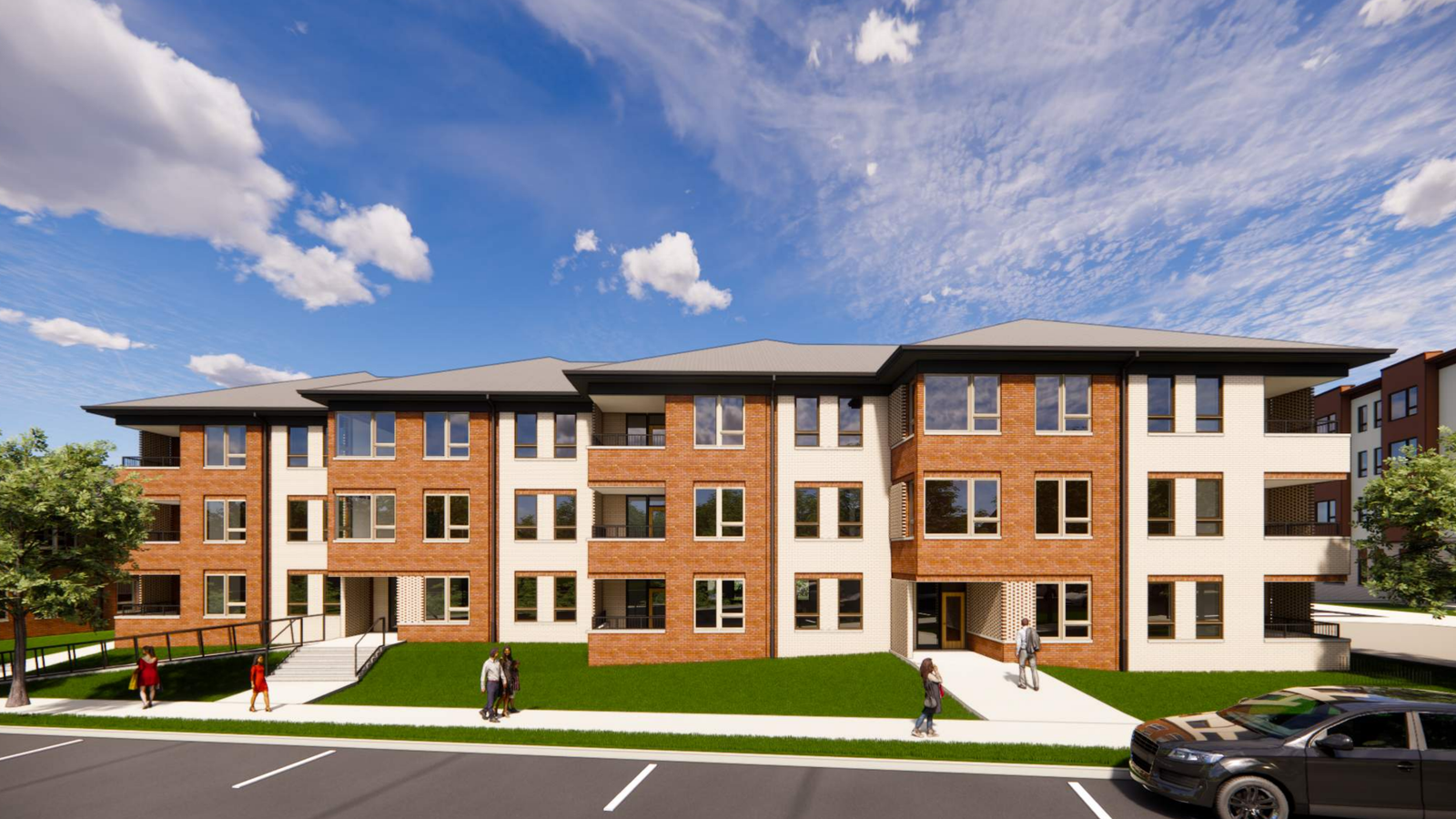
Summary of Case
Special exception under Section 911.02 for a 43-unit multi-unit residential building in the UI (Urban Industrial) district (BDA-2026-08398). The packet shows Trek Development Group and PWWG Architects' "Lexington Tech" project on URA-owned land at the former Lexington Technology Park, across from the East Busway's Homewood station. Local coverage describes 94 homes in three phases: this four-story, 43-unit building, four garden-style walk-ups with 43 more units, and four for-sale duplexes.
Discussion
None. The applicant asked to reschedule so it can hold another development activities meeting first.
Decision
Continued. A new hearing will be scheduled after the development activities meeting, and the property will be reposted.
Zoning Case 151 of 2026 — 3259 Bainton Street (Brighton Heights)
City materials: Case packet · Meeting agenda
Summary of Case
Review under Section 911.02 to use an existing building as two dwelling units in an R1A-H district, where two-unit residential isn't permitted (BDA-2026-03439). Property manager Nikki Smith testified by phone after Zoom audio trouble. She said she has managed the house since 2023, and both the prior owner and the current owner, who bought it in October 2024, bought and ran it as an up-and-down duplex. It was listed as a duplex both times it sold. The units share a front hallway, have separate water heaters and gas meters, and share one water meter. The owner wants to split the electric service properly, with a separate meter for Unit 2 and a house meter for the common areas, which is what triggered the occupancy review. Parking is on the street.
Discussion
Mitinger asked about the building's age (Smith believed the 1970s), whether it was built as a duplex (probably not, Smith said, but converted over the years), and whether there are other two-unit buildings nearby (Smith didn't know). Mitinger said the Board would check whether the zoning district changed over time. Burton-Faulk and Richardson had no questions. No one commented.
Decision
Hearing closed; decision pending. The Board will issue a written decision within the time the Code allows.
Zoning Case 135 of 2026 — 3567 Bigelow Boulevard (Polish Hill)
City materials: Case packet · Meeting agenda
Summary of Case
Special exception under Section 911.02 for interim housing in the UNC district: a change of use to an overflow shelter (BDA-2026-08072), plus off-site employee parking if the Board finds it's required. The October 1 hearing was continued so the Polish Hill Civic Association could review the operations plan, and that community meeting was held October 27. Attorney Michael Korns represented applicants Faye and Kevin Boland, who have a contract to buy the building. If approved, the Allegheny County Department of Human Services (DHS) would run the shelter through a contract with Community Family Advocates. Korns said any conditions would run with the property no matter who owns it.
DHS administrator Andy Halfhill said the program would use floors three through five of the six-story building, entered from Bigelow Boulevard. Floor four (men) and floor five (women) have large open rooms for group sleeping, and floor three is for people who need separate space. The garage holds two staff parking spaces and the dumpster. Ka'Asia Colter, who oversees DHS overflow shelters, said the shelter would average 80 to 100 adults a night, with up to 150 in peak demand or extreme weather. Hours would be 7 p.m. to 9 a.m., with dinner and breakfast brought in. There would be about 25 staff a night, including at least three to five security guards on site at all times, plus bag screening at entry and supervised 10-minute smoke breaks out front on Bigelow. More intensive services would stay at Second Avenue Commons and other providers. Traffic engineer Cynthia Jampole estimated peak staff parking demand at six spaces, with 12 provided (two in the garage and 10 at the First Avenue Garage). Pittsburgh Downtown Partnership shuttles would run four to five trips a night from Second Avenue Commons on main roads, not Polish Hill residential streets. Abigail Horn, director of DHS's Office of Community Services, said the county needs overflow beds year-round now, not just in winter. Pointing to the Perry South winter shelter, she said most 911 calls there were medical and neighborhood calls didn't rise after it opened. She also said property values around city shelters have risen faster than the citywide average since 2010, while saying that isn't causal. She offered weekly meetings with the civic association and Zone 2 police for the first eight weeks, then monthly, then quarterly.
Discussion
Mitinger pressed DHS on what "overflow" means: overnight only, for people who can't get a bed in a 24-hour shelter, with nobody on site during the day except in rare extreme-weather cases. She also asked whether the off-street area in front of the garage would be used for parking (the team said it's for trash rollout). Attorney Brendan O'Donnell, representing several neighboring property owners, put on the record that he believes the off-site parking relief wasn't properly sought or noticed and that an overnight-only shelter doesn't fit the ordinance's definition of interim housing. Mitinger said those are legal arguments for post-hearing filings. His cross-examination covered where shuttles would stop and turn on Bigelow, whether there's enough room inside for intake without lines outside, and who actually operates the shelter and pays security (DHS contracts with Community Family Advocates and the security vendor).
Supporters spoke first. Several Polish Hill residents, including John Rhoades and people who said they'd experienced homelessness, called it a reasonable use of a hard-to-reuse building. They pointed to the neighborhood's history of serving people in need, including Jubilee Kitchen and John Paul Plaza, and Rhoades said at least 26 service providers and advocacy groups had written in support. Councilmember Deb Gross, who co-sponsored the interim housing ordinance with Councilmember Anthony Coghill, asked the Board to deny. She said the ordinance was meant for transitional housing with on-site wraparound services, not overnight-only beds without privacy or stability, and that she and Coghill would send a letter. Polish Hill Civic Association president Colleen Shuda said the association hasn't taken a position. She criticized the fast timeline since September and said the community is divided. Opponents, including neighbors on Bethoven Street and the owners of the commercial building next door at 3577 Bigelow, raised shuttle and traffic backups on narrow streets, crowds at smoke breaks and morning release, emergency access from Bethoven Street, school-bus stops nearby, effects on neighboring businesses, and whether the building suits a shelter this size. Some asked for party status. Korns briefly answered comments about the building's past use as a nightclub, which he said was never a permitted use.
Decision
Hearing closed; decision pending. Calling the room the biggest since the "No Frickin Way" fight over apartments next to Frick Park, Mitinger asked both lawyers for proposed findings of fact and conclusions of law within six weeks (about December 24), and both agreed. A written decision is due 45 days after the record closes, likely in early 2027.
In the news: Polish Hill shelter proposal called 'damaging' and 'minimal' in heated hearing — PublicSource, November 12, 2026. At first major hurdle, homeless shelter proposal divides Polish Hill — WPXI, November 12, 2026. Proposed Polish Hill homeless shelter divides residents at Pittsburgh zoning hearing — 90.5 WESA, November 13, 2026. Polish Hill shelter proposal draws questions about parking and transit — TribLive, November 13, 2026.
Summary prepared with the assistance of AI from the public YouTube recording. This is not an official City of Pittsburgh record.