On November 17, 2026, Pittsburgh Planning Commission gave City Council a positive recommendation to revoke the historic designation of the Hefty House at 624 East Ohio Street in East Allegheny, heard the first of four briefings on PGH2050, the city's first comprehensive plan, and gave final approval to the Wharton Street plan of lots. The 1100 Fifth Avenue demolition case was postponed. Here’s what happened, by case.
Recording: https://www.youtube.com/watch?v=gUrFiuxYizo
Hearing and Action
DCP-HN-2026-00212 — Hefty House, 624 East Ohio Street (East Allegheny)
City materials: Presentation · Meeting agenda
Summary of Case
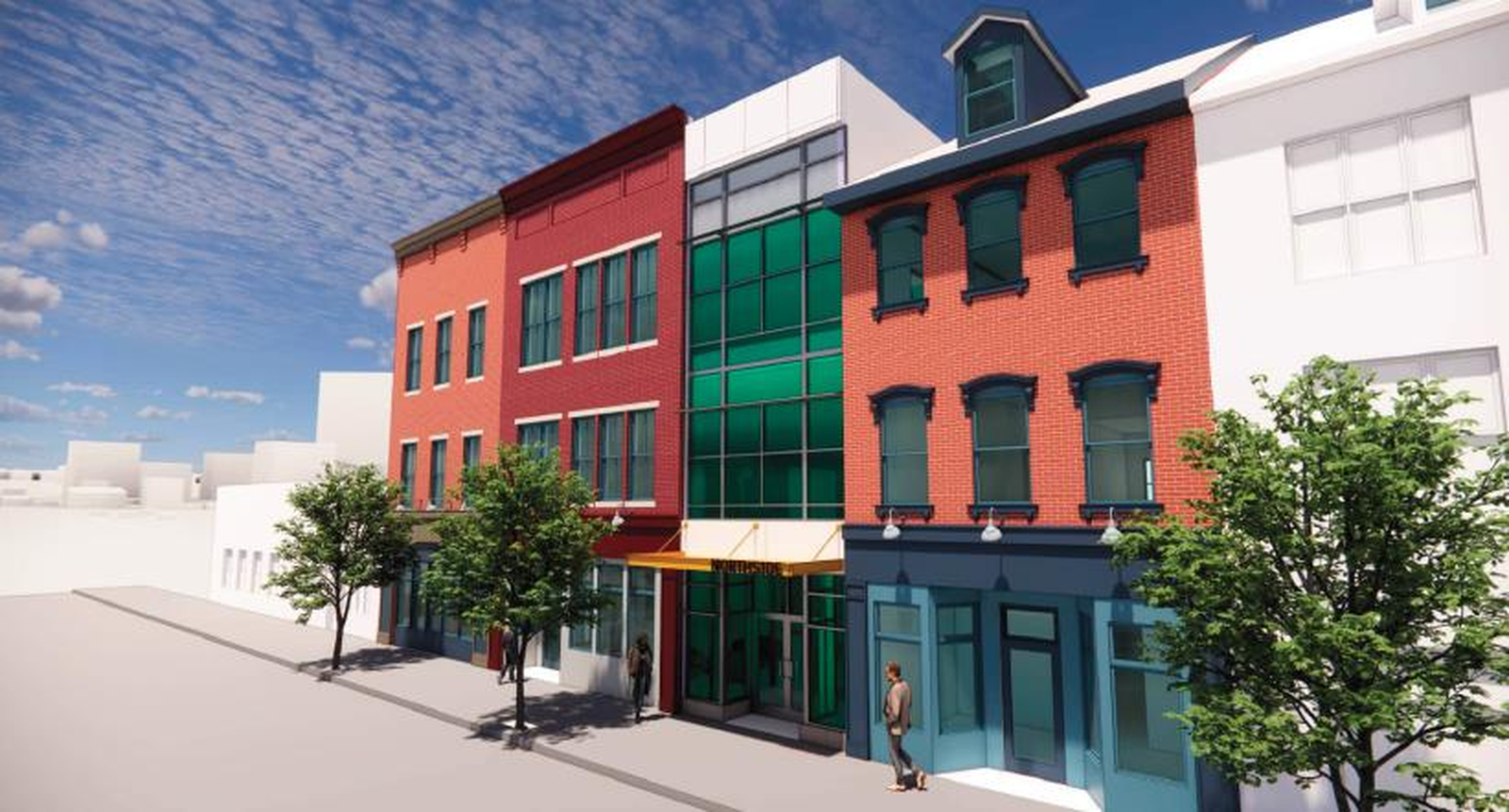
The Urban Redevelopment Authority of Pittsburgh (URA), which owns the building, applied on August 3, 2026 to revoke the individual landmark designation of the Hefty House. It's a vacant 2½-story wood-frame house with a brick front, built sometime between the 1820s and 1840s and designated in 2018. Katie Reid of City Planning explained that Pittsburgh's historic preservation code has no separate process for revocation, so the Law Department advised using the designation process in reverse: the Historic Review Commission finds reasonable cause and makes a recommendation, the Planning Commission makes its own recommendation, and City Council holds a hearing and decides. The Planning Commission's role is to weigh the effects of the revocation on adjoining properties and the surrounding neighborhood within the city's planning and land use objectives. The Historic Review Commission found reasonable cause and recommended revocation on November 4, 2026. Reid also said the proposed Title 11 updates now with the Mayor's office include a formal revocation process.
URA project manager Gordon Hall said the building has been vacant for about 30 years, owned by the City for roughly a decade and by the URA for about 20 years. Two public RFPs in the last 10 years and several years of for-sale marketing didn't produce a viable project, and a state Main Street Matters grant application for structural stabilization wasn't funded. URA civil engineer Wais Baheen said a 2025 independent structural review found about 80% of the framing deteriorated from water and moisture damage, the building has repeated Department of Permits, Licenses and Inspections citations, and repairs would cost more than new construction. He said the building no longer meets the three criteria it was designated under: architectural significance, pattern of neighborhood development, and physical appearance. Hall said the URA puts protective scaffolding over the sidewalk every winter to keep falling bricks off pedestrians.
Hall said the house sits in the middle of a planned 600-block assemblage: 628 East Ohio (also URA-owned) and the neighboring building owned by Historic Deutschtown Development Corporation. There, the One Northside initiative, backed by the Buhl Foundation, plans a "Community Engagement Center." He said the project's details and fundraising are still underway, and that it can't happen with the designated building in the middle of the site. He said demolition is never the URA's first choice and pointed to URA demolitions on the 500 block of Larimer Avenue that led to new housing.
Discussion
Melissa McSwigan of Preservation Pittsburgh said the current ordinance has no process for delisting, so delisting shouldn't be done and would set a bad precedent. She said the city has other ways to deal with unsafe buildings and should use those. The chair noted for the record that staff had explained the Law Department's advice and the pending code change. A speaker for Pittsburgh History & Landmarks Foundation strongly opposed revocation. They said the city acquired the building, let it decline, and is now citing its condition, and they called it shameful that the city wouldn't follow its own preservation ordinance. They also warned that private developers could follow the same playbook. Sarah Bailey, a Deutschtown resident and president of the East Allegheny Community Council, said the council fully supports the URA's request and that the building should never have been designated. The Commission also received written correspondence from Nicholas Kyriazi on this item. Commissioners had no questions or comments before the motion.
Decision
Positive recommendation to City Council to revoke the historic designation. Motion by Darrin Kelly, seconded by David Vatz. Roll call ayes: LaShawn Burton-Faulk, Justin Hunt, Darrin Kelly, Peter Quintanilla, Bob Reppe, and David Vatz. Rachel O’Neill and Diamonte Walker abstained. Gerardo Interiano wasn't called in the roll and didn't vote. The revocation now goes to City Council for a public hearing and a final decision.
Also on the Agenda
Briefing: PGH2050 Comprehensive Plan — Section 1, Introduction (Citywide)
City materials: Presentation
In the news: Pittsburgh official calls controversial 25-year master plan the city’s ‘North Star’ — TribLive, Nov 17, 2026
A briefing is a first look: there's no public testimony and no vote. City Planning Director Ivette Mongalo-Winston and Deputy Director Andrew Dash presented the first of four briefings on PGH2050, Pittsburgh's first comprehensive plan. Mongalo-Winston called it a "north star" for the next 25 years. She said it isn't zoning and won't change zoning when it's adopted, but it will recommend changes for the zoning code overhaul that starts in 2027. It's also meant to tie city budgeting to the priorities residents named. The plan has four sections: an introduction (today's briefing), future land use and built form, policy elements, and implementation. The remaining briefings are scheduled for December 1 and December 15, 2026 and January 12, 2027. The 60-day public comment period opens December 7 on the city's Engage PGH platform, with copies at libraries and weekly drop-in office hours at 412 Boulevard of the Allies. A Planning Commission hearing and vote is targeted for around March 2027, followed by City Council.
Section 1 makes the case for growth. Pittsburgh has about 300,000 residents and infrastructure built for more than 600,000. Staff described growth as five things at once: more housing choices in every neighborhood, more businesses and jobs in urban centers and commercial streets, resilient infrastructure, reinvestment that grows the population without displacing current residents, and development that still looks and feels like Pittsburgh. The 2025 growth scenarios projected about 120,000 new residents, 48,000 to 60,000 new housing units, about 186,000 new jobs, 2,000 to 3,000 acres of new public green space, and about $32 million a year in net new tax revenue. The plan's ten resident-named vision statements fall under four commitments: authenticity, inclusion, stability, and coordination and accountability. Dash said the densest growth is directed to Downtown, urban centers, riverfronts and transit, with more housing in all areas at appropriate scales. Staff said the process engaged more than 33,100 people, over 10% of residents, and an implementation dashboard will track progress.
One commissioner thanked staff for pointing out that households are getting smaller, which is why the city needs more housing even with a flat population. A commissioner who identified himself as an architect (apparently Peter Quintanilla) asked whether Brunot Island is shown for density. Staff said it'll be covered as an industrial area in the next briefing. He also raised a concern about new buildings that don't fit their neighborhood's architecture. Staff said Section 2 adds form guidance on things like height, frontage, landscape and lot size, not materials or style, and that design guidelines will be looked at in the zoning rewrite. David Vatz said he's highly skeptical of being overly prescriptive about design. He said rules requiring costly materials or methods can make it unaffordable to build the housing the city needs, and that some features of modern buildings people dislike are there because codes require them. His priority, he said, is making sure the city can build a lot of housing. Bob Reppe, also an architect, said some guardrails help, that recent "norm-core" housing works and adds a lot of housing but isn't very creative, and that zoning is only one lever alongside process changes and market forces. Staff said the zoning rewrite will be done with architects and other practitioners and that Pittsburgh deserves high-quality architecture, including affordable housing. Justin Hunt praised the engagement and asked how a 25-year plan will be revisited. Dash said Section 4 builds in a 10-year assessment and flexibility. Staff added that the city expects to publish a yearly public report based on the dashboard.
Plan of Lots — DCP-LOT-2026-00265, Wharton Street (South Side Flats)
City materials: Case packet
Daniel Scheppke of City Planning presented the major consolidation of seven parcels into one parcel of about 3.6 acres (about 155,150 sq. ft.) fronting Wharton Street, South 23rd Street and South 24th Street. Several industrial buildings on the site are slated for demolition. The Commission gave the item preliminary approval on November 3, 2026. There was no public testimony. Final approval, on a motion by David Vatz, seconded by Peter Quintanilla. Roll call ayes: Burton-Faulk, Hunt, Kelly, O’Neill, Quintanilla, Reppe, Vatz, and Walker.
Postponed: DCP-ZDR-2025-05734 — 1100 Fifth Avenue (Bluff)
The hearing and action on Collier Development's application to demolish three buildings at 1100 Fifth Avenue, briefed on November 3, 2026, was postponed under the revised agenda the city sent on November 16. No new date was announced at the meeting. The Commission received correspondence on this item from Uptown Partners of Pittsburgh.
Minutes and Correspondence
The Commission approved the November 3, 2026 minutes on a motion by Peter Quintanilla, seconded by Darrin Kelly, with all eight commissioners present voting aye. The Commission received correspondence on the short-term rental legislation from two members of the public, along with the correspondence noted above on 1100 Fifth Avenue and 624 East Ohio Street. There was no Director's Report.
Summary prepared with the assistance of AI from the public YouTube recording. This is not an official City of Pittsburgh record.